Businesses should hire professionals for sign installation because proper installation protects people, property, and your investment. Professional installers have the equipment, training, and experience to mount signs safely, connect electrical components correctly, follow permit and code requirements, and position signs for the best visibility.
A sign may look simple to hang, but many commercial signs are heavy, illuminated, and mounted high on buildings or poles. Improper installation can lead to falling signs, electrical hazards, water damage, failed inspections, and costly repairs. For Kansas businesses facing high winds, hail, and severe storms, getting installation right is especially important.
How Professional Sign Installation Ensures Safety and Proper Placement
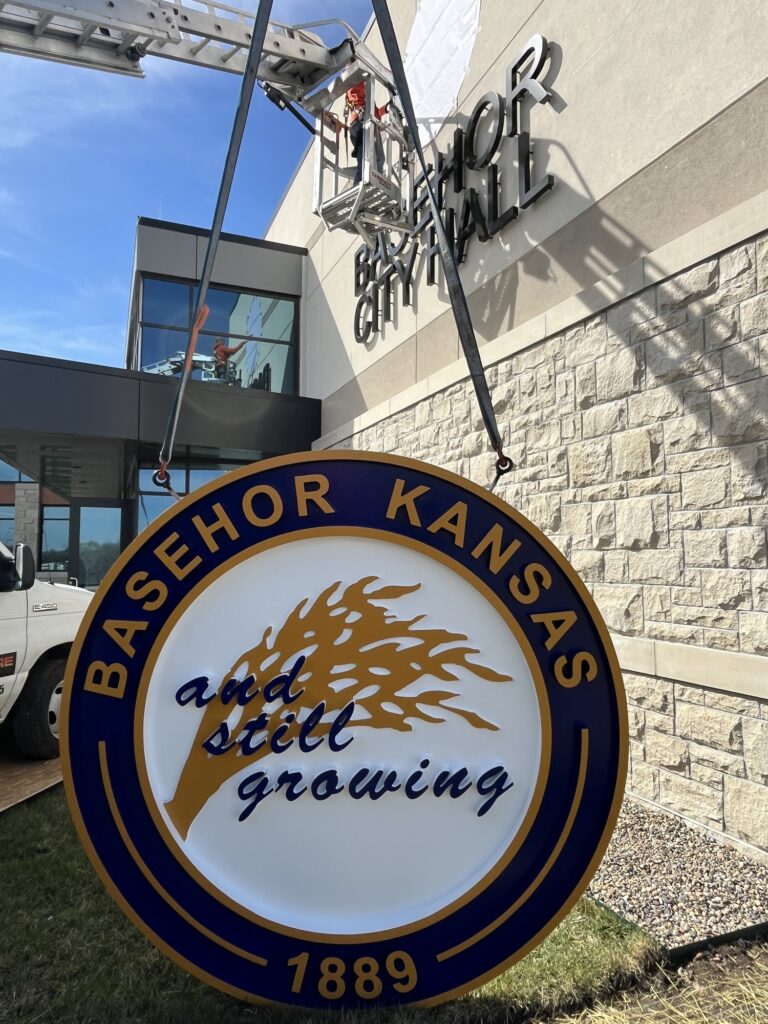
Professional sign installation ensures safety by using the right equipment, mounting hardware, and electrical practices, and it ensures proper placement by positioning signs where customers can easily see them while meeting local code requirements.
Safety Considerations
- Working at height: Installers use bucket trucks, lifts, and cranes to mount signs safely.
- Structural mounting: Anchors and hardware must match the wall or structure, whether brick, block, stucco, metal panels, or wood framing.
- Wind loads: Signs must be secured to withstand strong winds, which are common across Kansas.
- Electrical work: Illuminated signs must be wired and connected safely, typically by licensed professionals, and often require inspection.
- Public safety: Crews manage work zones to protect pedestrians, customers, and vehicles.
Proper Placement
Placement affects how well your sign performs. Professionals consider:
- Sightlines from roads, parking lots, and sidewalks
- Height and centering on the building facade
- Obstructions like trees, poles, and awnings
- Setbacks, height limits, and placement rules in local sign codes
- Landlord or shopping center sign criteria
Permits and Inspections
Most Kansas cities require permits for permanent signs, and illuminated signs often require electrical permits and inspections. Professional sign companies can coordinate permits and schedule inspections so your sign is installed legally and safely.
How Expert Sign Installation Helps Protect Your Sign and Extend Its Lifespan
Expert installation extends a sign’s lifespan by preventing common problems like water intrusion, loose mounting, electrical failures, and structural stress. When a sign is installed correctly from the start, it is more likely to perform well for years with less maintenance.
Ways Proper Sign Installation Protects Your Sign
- Sealing wall penetrations: Properly sealed mounting points help prevent water from damaging the building or sign.
- Maintaining drainage: Weep holes and drainage paths in channel letters and cabinets must stay clear to prevent moisture buildup.
- Correct anchors and hardware: Help prevent loosening from wind, vibration, and temperature changes.
- Secure electrical connections: Reduce the risk of flickering, outages, and component failure.
- Level alignment: Prevents uneven stress on mounting points and keeps the sign looking professional.
- Proper foundations: Freestanding signs need footings designed for the sign’s size, weight, and wind exposure.
Protecting Warranties
Some sign and component warranties may depend on professional installation. Installing a sign incorrectly can void coverage and leave you responsible for repair costs.
What Are the Risks of DIY Sign Installation?
- Injury from falls or equipment accidents
- Electrical hazards and code violations
- Damage to the sign or building
- Failed inspections or fines for unpermitted signs
- Signs loosening or falling during storms
What Should You Ask a Sign Installer?
- Do you handle permits and inspections?
- What equipment and crew will be used?
- Who performs electrical connections?
- Are you insured for installation work?
- How will you protect my building during installation?
- Do you offer maintenance and repair after installation?
Conclusion
Professional sign installation keeps your team, customers, and property safe while ensuring your sign is positioned for maximum visibility and built to last. From structural mounting and electrical work to permits and weatherproofing, experienced installers help Kansas businesses protect their signage investment for years to come.
Get Professional Sign Installation From Prairie Fire Signs
Prairie Fire Signs & Graphics, based in Shawnee, Kansas, provides design, permitting, fabrication, and installation for business signs. Visit Prairie Fire Signs & Graphics or contact us to schedule a consultation.
Frequently Asked Questions
How long does sign installation take?
Installation time depends on the sign type, size, mounting surface, and whether electrical work or foundations are required. Many wall signs can be installed in a day, while freestanding signs with footings may take longer. Permits and inspections can also affect scheduling.
Do I need a permit to install a business sign?
Most Kansas cities require permits for permanent exterior signs, and illuminated signs usually need electrical permits. Requirements vary by municipality. A full-service sign company can research local codes and manage the permitting process for you.
Can a sign be installed on any type of wall?
Most walls can support signs, but mounting methods vary by material. Brick, concrete block, stucco, metal panels, and wood framing each require specific anchors and techniques. A professional installer evaluates the wall before installation to choose the safest method.
What happens if a sign is installed incorrectly?
Improper installation can lead to loose or falling signs, water damage, electrical problems, and failed inspections. It may also void warranties. Correcting installation problems is often more expensive than installing the sign correctly the first time.