
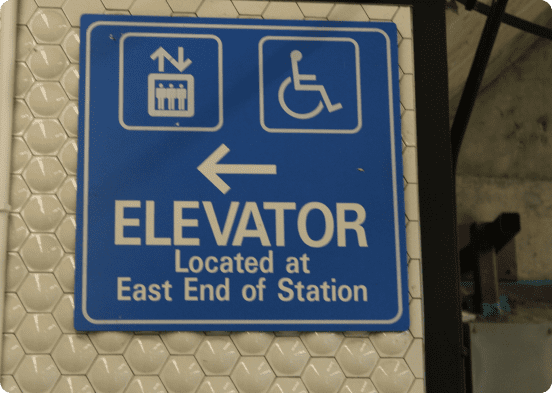
When customers walk into your Kansas business, they shouldn’t need a GPS to find the restroom or the conference room. Effective wayfinding is the “invisible hand” that guides visitors through your space, but for that guidance to be truly inclusive, it must integrate ADA signs.
Far from being just a legal obligation, ADA-compliant signage ensures that every individual, including those with visual or mobility impairments, can navigate your facility with independence and dignity. Here is how you can weave accessibility into your wayfinding system seamlessly.
Designing Wayfinding Systems That Include ADA Signs Seamlessly
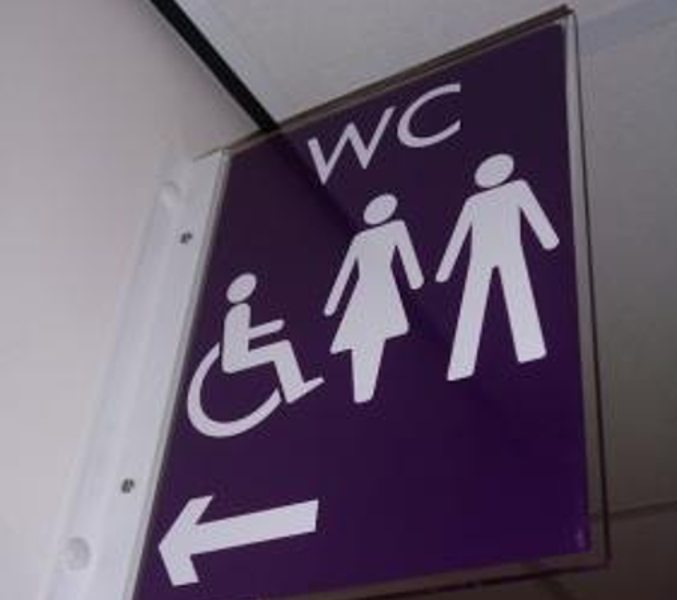
Wayfinding is a journey, and ADA signs act as the essential landmarks along that path. To integrate them effectively, you must understand where different types of signs fit into the navigation flow:
- Directional Signage: These are the “scouts” of your system. Placed at decision points like hallway intersections or elevator banks, they use arrows and high-contrast text to point toward key areas. While directional signs don’t always require Braille, they must follow strict visual standards for font legibility and non-glare finishes.
- Identification Signage: These are the “destinations.” Every permanent room—restrooms, exits, and mechanical closets—must have a tactile sign.
- Logical Hierarchy: A successful system uses a consistent “visual language.” For example, if your directional signs use a specific blue and white color scheme, your identification ADA signs should follow suit to “teach” the visitor what to look for next.
Balancing Accessibility and Aesthetics in ADA-Compliant Wayfinding
Many Kansas business owners worry that compliance means sacrificing their brand’s interior design. Modern fabrication, however, allows you to marry form and function beautifully.
- Brand-Consistent Materials: You aren’t limited to blue plastic. You can use brushed aluminum, wood laminates, or matte-finish acrylics that match your office’s “vibe” while still meeting tactile and non-glare requirements.
- Creative Contrast: The ADA requires high contrast (light on dark or dark on light), but this doesn’t have to be black and white. You can use your brand colors—such as a deep navy background with crisp cream lettering—to maintain a professional look that remains easy to read for those with low vision.
- Strategic Placement: By mounting signs at the required 48 to 60 inches from the floor on the latch side of the door, you create a predictable environment. Predictability is the key to accessibility; when a visitor knows exactly where to look (or feel) for information, their stress level drops significantly.
Is your facility ready for a wayfinding upgrade? Contact Prairie Fire Signs & Graphics today to learn how we can design and install a custom ADA signs system that elevates your brand and your accessibility.