Under the 2010 ADA Standards for Accessible Design, Kansas businesses generally need ADA-compliant interior signage for permanent rooms and spaces, such as restrooms, offices, conference rooms, and exit stairwells, along with directional and informational signs that guide people to accessible features. Permanent room signs typically require raised tactile characters, Grade 2 Braille, high contrast, non-glare finishes, and specific mounting heights and locations.
ADA signage helps people with visual impairments and other disabilities navigate buildings independently. Because requirements are detailed and noncompliance can lead to complaints or legal issues, it is important to understand which signs apply to your space. This article provides general information and is not legal advice.
What ADA Requirements Apply to Interior Signage in Kansas Businesses?
ADA requirements for interior signage are set by the federal 2010 ADA Standards for Accessible Design and apply to businesses in Kansas just as they do nationwide. Kansas and local jurisdictions may also adopt building codes that include accessibility requirements, so confirm local rules with your building department.
Key Requirements for Tactile Room Signs
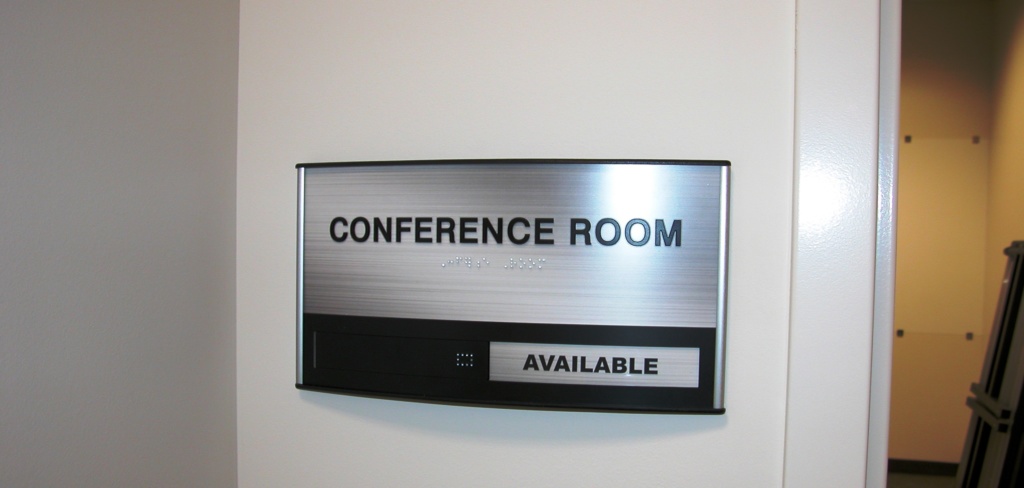
- Raised characters: Uppercase, sans serif characters raised from the sign surface, within specified size ranges.
- Grade 2 Braille: Placed below the corresponding text.
- Contrast: Characters must contrast with their background, either light on dark or dark on light.
- Non-glare finish: Characters and backgrounds must have a non-glare finish.
- Mounting height: Tactile characters are generally mounted between 48 and 60 inches above the floor, measured to the baseline of the characters.
- Location: Signs are typically mounted on the wall beside the door on the latch side, with clear floor space in front so people can approach without being hit by a swinging door.
- Pictograms: When used to identify a room, pictograms require a defined field and a text descriptor with tactile characters and Braille below.
Visual Character Requirements
Directional and informational signs that are not tactile still need readable visual characters, including appropriate character height based on viewing distance and mounting height, legible fonts, contrast, and non-glare finishes.
Which Types of Interior Signage Must Meet ADA Accessibility Standards?
Signs that identify permanent rooms and spaces must meet tactile requirements, while directional and informational signs must meet visual requirements. Certain accessible features must also be identified with the International Symbol of Accessibility.
Signs That Typically Require Tactile Characters and Braille
- Restroom and bathing room signs
- Office and room number signs
- Conference, break, and storage room signs
- Exit stair, exit passageway, and exit discharge door signs
- Elevator floor designations on hoistway entrances
Signs That Typically Require Visual Compliance
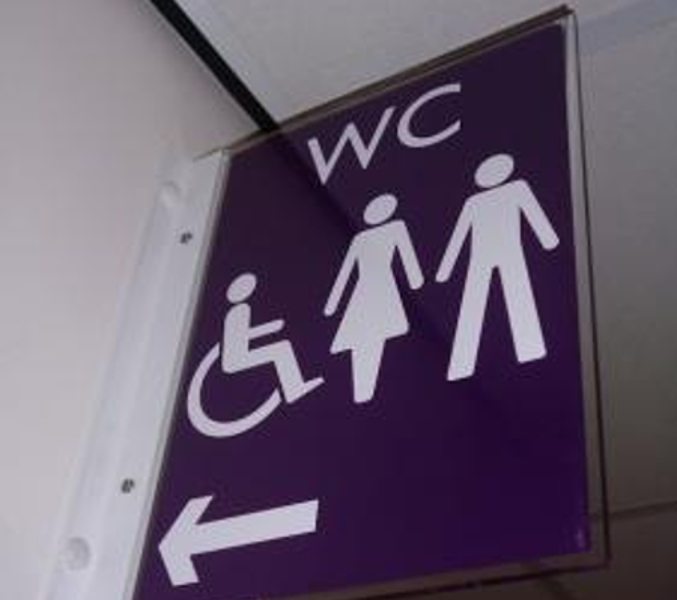
- Directional signs pointing to restrooms, elevators, and exits
- Informational signs about building features and services
- Signs directing people to accessible entrances or restrooms when not all are accessible
Signs That Use the International Symbol of Accessibility
- Accessible entrances, when not all entrances are accessible
- Accessible restrooms and bathing rooms, when not all are accessible
- Accessible checkout aisles, when not all are accessible
Common Exceptions
Some signs are generally not required to meet all ADA sign standards, such as building directories, menus, occupant names, company names and logos, and temporary signs used for a short period. Review the ADA Standards or consult a professional to confirm how exceptions apply.
How Do You Make Sure Your Interior Signage Is Compliant?
- Walk your space and list every permanent room, exit, and accessible feature.
- Identify which signs need tactile characters and Braille and which need visual compliance.
- Confirm local building code requirements with your city or county.
- Work with a sign company experienced in ADA signage fabrication.
- Install signs at the correct height and location.
- Review signage during renovations, tenant changes, or expansions.
Can ADA Signs Match Your Brand?
Yes. ADA-compliant signs can use your brand colors, materials, and styling as long as they meet contrast, font, tactile, Braille, and finish requirements. Many businesses coordinate ADA signs with lobby and wayfinding signs for a cohesive look.
Get ADA Interior Signage From Prairie Fire Signs
ADA-compliant interior signage helps Kansas businesses create accessible, welcoming spaces and meet federal accessibility standards. Permanent room signs generally require tactile characters, Braille, contrast, and correct mounting, while directional and informational signs must meet visual requirements. Because requirements are detailed, working with an experienced sign professional and confirming local code requirements helps ensure your signs are compliant.
Prairie Fire Signs & Graphics designs, fabricates, and installs ADA and interior signage for Kansas businesses. Visit Prairie Fire Signs & Graphics or contact us to plan your ADA sign package.
Frequently Asked Questions
Do all businesses need ADA signs?
Most businesses open to the public, as well as many employers, are subject to ADA requirements. New construction and alterations must meet the 2010 ADA Standards, including signage requirements. Confirm your obligations with an accessibility professional or local building official.
How high should ADA signs be mounted?
Under the 2010 ADA Standards, tactile characters on signs are generally mounted between 48 inches above the floor, measured to the baseline of the lowest tactile character, and 60 inches above the floor, measured to the baseline of the highest tactile character. Signs are typically placed on the latch side of the door.
Do ADA signs need Braille?
Signs that identify permanent rooms and spaces, such as restrooms and offices, generally require Grade 2 Braille along with raised characters. Directional and informational signs typically do not require Braille but must meet visual readability requirements.
Can I use any font on ADA signs?
No. Tactile characters must be uppercase and sans serif, and visual characters must meet readability requirements for style, proportion, and spacing. Decorative, script, and italic fonts are generally not permitted for required characters.